
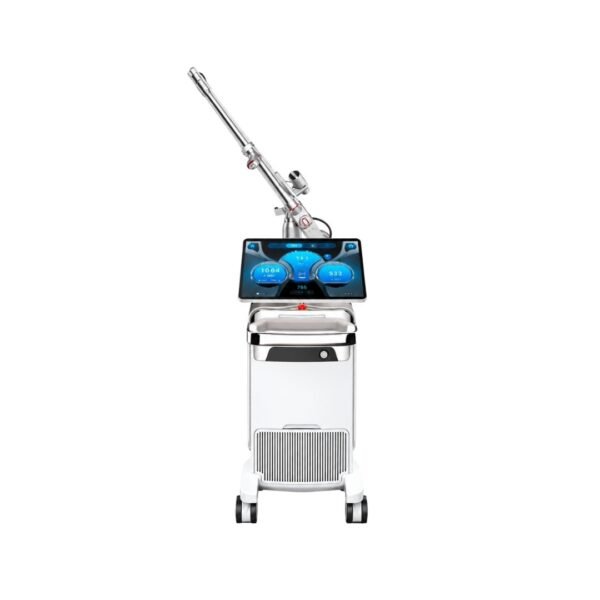
Picosecond Laser Machine
₨350,000
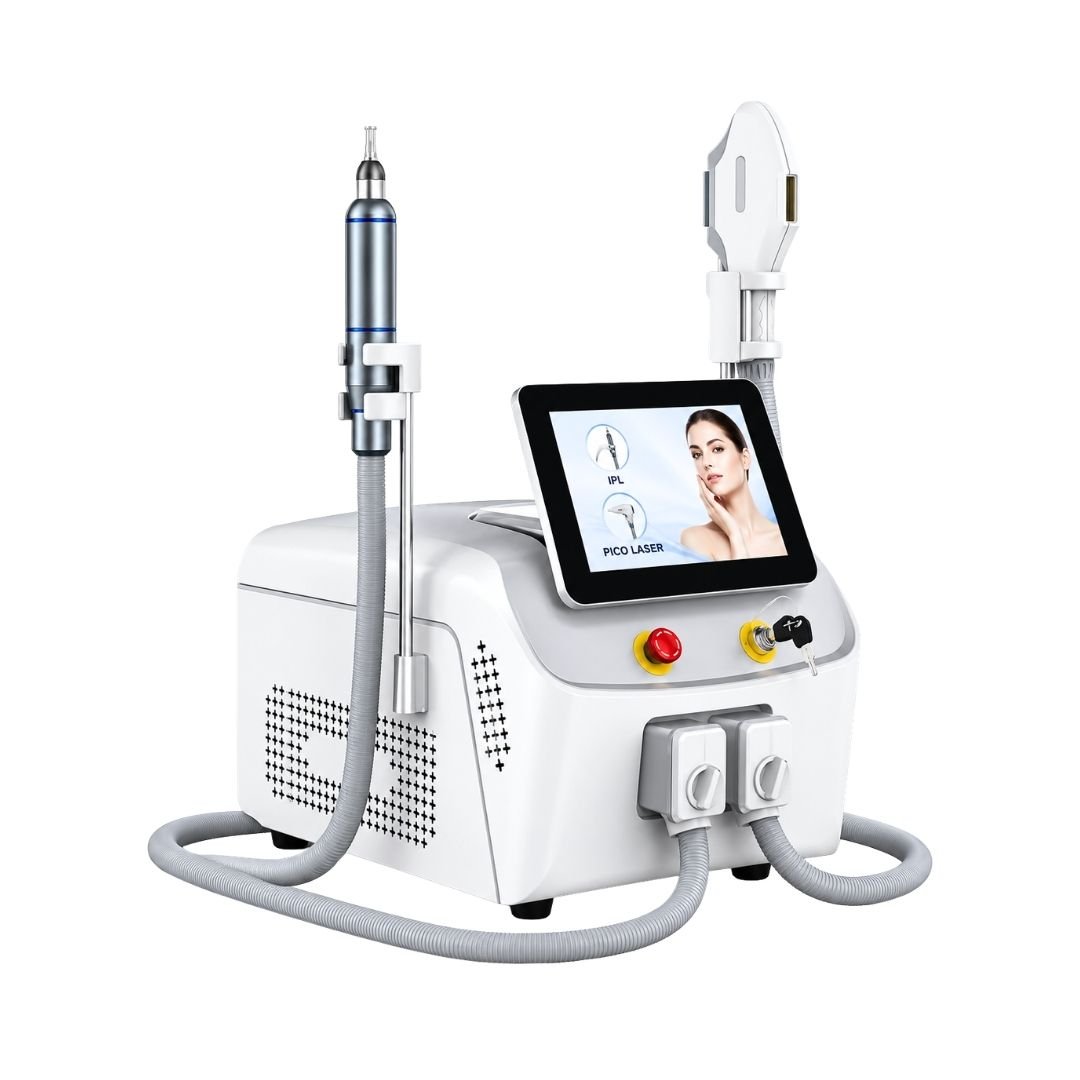
The Picosecond Laser Machine is a professional aesthetic laser system designed to deliver extremely short laser pulses in the picosecond range. It is widely used in aesthetic and dermatological practices for applications involving tattoo pigment, pigmentation and selected skin-rejuvenation procedures. Depending on the machine configuration, picosecond platforms may offer wavelengths such as 532 nm, 755 nm and 1064 nm, with some systems providing additional options.
Picosecond technology differs from conventional nanosecond Q-switched laser technology primarily through its much shorter pulse duration. Clinical evidence supports picosecond lasers for several pigmentary and tattoo-related applications, although outcomes depend on wavelength, pulse duration, fluence, spot size, pigment characteristics and the patient’s skin type.

Need Help? Chat with an Expert
Global Equipment Delivery
Cost Effective Solutions
Professional Support
Secure Payment
Details
What Is a Picosecond Laser Machine?
A Picosecond Laser Machine is an energy-based aesthetic device that produces laser pulses lasting in the picosecond range—one trillionth of a second.
The extremely short pulse duration allows laser energy to interact with targeted pigment with a strong photomechanical component while limiting the duration of heat exposure to surrounding tissue.
This makes picosecond technology particularly relevant for treatments involving:
- Tattoo pigment
- Pigmented lesions
- Selected pigmentation concerns
- Freckles
- Selected photoaging concerns
- Cosmetic pigmentation
- Selected skin-rejuvenation protocols
- Some acne-scar and texture applications, depending on the handpiece
A 2023 review of picosecond lasers in cosmetic dermatology identified applications in tattoo removal, epidermal and dermal pigmentation and collagen remodeling.
How Does a Picosecond Laser Work?
The basic principle is the delivery of very short laser pulses to a selected target.
When appropriate wavelength and treatment parameters are used, pigment absorbs the laser energy. The extremely short pulse can produce a predominantly photoacoustic/photomechanical effect, helping disrupt pigment into smaller particles.
The body’s natural processes can then gradually clear the fragmented pigment.
This is one reason picosecond lasers are widely used for tattoo treatment and selected pigmentary procedures.
The treatment result is influenced by:
- Wavelength
- Pulse duration
- Fluence
- Spot size
- Repetition rate
- Pigment color
- Pigment depth
- Tattoo composition
- Skin phototype
- Treatment interval
- Individual response
Modern clinical reviews emphasize that these parameters cannot be considered independently.
Picosecond Laser Wavelengths
One of the most important specifications when purchasing a Picosecond Laser Machine is its wavelength configuration.
Different wavelengths interact differently with different pigments.
532 nm
532 nm is commonly used for selected superficial pigmentation and certain tattoo colors.
755 nm
755 nm picosecond systems are particularly relevant to selected tattoo pigments and pigmentary applications.
A 2026 randomized split-tattoo trial reported higher clearance scores with a 755-nm picosecond alexandrite laser compared with a 755-nm nanosecond alexandrite laser in the studied black/blue tattoos, while also reporting pigmentary adverse events in both groups.
1064 nm
1064 nm is widely used for deeper pigment targets and tattoo treatment and is particularly relevant in patients with darker skin when appropriately selected.
1320 nm
Some commercial platforms also offer a 1320-nm configuration for selected skin-rejuvenation applications. However, this should not be assumed to be included in every machine.
Important: A machine advertised as “Picosecond Laser” does not necessarily contain every wavelength. Always confirm the exact configuration before purchase.
Picosecond Laser for Tattoo Removal
Tattoo removal is one of the most recognized applications of picosecond laser technology.
Tattoo ink particles are located within the skin. Laser energy is targeted at the pigment, helping break it into smaller particles that can subsequently be cleared by the body’s natural processes.
The response depends strongly on the tattoo.
Factors include:
- Ink color
- Ink density
- Tattoo depth
- Tattoo age
- Tattoo location
- Professional vs amateur tattoo
- Pigment composition
- Previous laser treatment
- Skin type
A 2025 systematic review and meta-analysis covering 21 comparative studies and 971 patients found picosecond and nanosecond lasers had comparable efficacy for endogenous hyperpigmentation, while picosecond systems showed advantages in some exogenous pigmentation outcomes and lower rates of certain pigmentary adverse events in the analyzed studies.
Tattoo removal normally requires multiple sessions rather than one treatment.
Picosecond Laser for Pigmentation
Picosecond lasers are also used in selected pigmentation treatments.
Possible applications include:
- Freckles
- Solar lentigines
- Selected benign pigmented lesions
- Uneven pigmentation
- Cosmetic pigmentation
- Selected photoaging-related pigmentation
However, not every pigmented lesion should be treated cosmetically without assessment.
A systematic review of laser treatment for pigmented lesions highlights that treatment response varies according to lesion characteristics and that aggressive treatment can also produce unwanted pigmentary changes.
Picosecond Laser and Melasma
Melasma requires particular care.
Although picosecond lasers have been investigated for melasma, they should not be marketed as a guaranteed or universal solution.
A 2025 systematic review and meta-analysis of randomized trials involving 755-nm picosecond alexandrite lasers found that conventional topical triple-combination therapy performed better on some MASI outcomes, while post-inflammatory hyperpigmentation was more frequent with picosecond treatment than topical therapy in the included studies.
Therefore, melasma treatment should be individualized and performed with conservative, evidence-based protocols.
Picosecond Laser for Skin Rejuvenation
Some picosecond systems use specialized handpieces, including fractional or microlens-array attachments, to create controlled microscopic treatment zones.
Depending on the device, these configurations may be used in selected:
- Skin-texture treatments
- Photorejuvenation procedures
- Collagen-remodeling protocols
- Fine-line treatments
- Acne-scar protocols
The exact application depends on the wavelength, handpiece and manufacturer’s intended use.
A picosecond laser should therefore not automatically be described as a replacement for fractional CO₂ laser or other resurfacing technologies.
Picosecond Laser for Acne Scars
Certain picosecond systems can be used with fractional or diffractive handpieces for selected acne-scar and skin-texture procedures.
The mechanism and treatment depth are different from ablative CO₂ resurfacing.
The objective may include controlled dermal stimulation and collagen remodeling rather than simply removing the surface of the skin.
Patient selection and device configuration are particularly important.
Picosecond Laser vs Q-Switched Nd:YAG
Picosecond systems are often compared with Q-switched nanosecond lasers.
| Feature | Picosecond Laser | Q-Switched Laser |
|---|---|---|
| Pulse duration | Picoseconds | Nanoseconds |
| Primary applications | Pigment, tattoos, selected rejuvenation | Pigment, tattoos |
| Photomechanical effect | Strong | Strong |
| Wavelength | Model-dependent | Model-dependent |
| Tattoo treatment | Yes | Yes |
| Pigmentation | Selected applications | Selected applications |
| Fractional handpieces | Available on some systems | Available on selected systems |
| Skin-type considerations | Important | Important |
The choice should be based on the specific clinical indication rather than simply assuming that newer technology is appropriate for every patient.
Picosecond Laser for Skin of Color
This is particularly important for the Pakistani market.
Patients with Fitzpatrick skin types IV–VI have higher epidermal melanin levels, which can compete with the intended target for laser energy.
A 2026 clinical review of energy-based devices in skin of color notes increased risks including post-inflammatory hyperpigmentation, hypopigmentation, blistering and scarring, and emphasizes appropriate device selection, parameter optimization and risk mitigation. The review identifies low-fluence Q-switched and picosecond Nd:YAG systems as having favorable profiles for some pigmentary and tattoo applications when appropriately used.
This means that having a picosecond machine does not automatically make a treatment safe for every skin type.
The practitioner must select appropriate:
- Wavelength
- Fluence
- Spot size
- Pulse parameters
- Treatment endpoint
- Cooling
- Treatment interval
Important Features of a Professional Picosecond Laser Machine
When purchasing a machine, examine the actual technical specifications.
1. Multiple Wavelengths
A professional platform may offer configurations such as:
- 532 nm
- 755 nm
- 1064 nm
Some machines offer additional wavelengths.
For example, a current Pakistani equipment catalogue lists picosecond configurations with optional 532/1064/755/1320 nm wavelengths.
2. Picosecond Pulse Duration
Confirm the actual pulse duration from the manufacturer.
Do not assume every machine advertised as “Pico” has identical pulse characteristics.
3. Energy Output
Check the actual energy range and whether the manufacturer specifies energy per pulse or another measurement.
4. Spot Size
Adjustable spot sizes provide greater flexibility for different treatment areas.
5. Repetition Rate
Check the available Hz range.
Some commercial configurations advertise ranges such as 1–10 Hz, but this varies by model.
6. Cooling System
Cooling may be provided through:
- Water cooling
- Air cooling
- Handpiece cooling
- Combination cooling
The exact system should be confirmed before purchase.
7. Handpieces
Different handpieces can expand the machine’s applications.
Possible configurations include:
- Standard focusing handpiece
- Fractional handpiece
- MLA handpiece
- Zoom handpiece
- Different wavelength handpieces
Picosecond Laser Machine Price in Pakistan
The Picosecond Laser Machine price in Pakistan varies considerably depending on the machine’s configuration.
Important factors include:
- Number of wavelengths
- Laser source
- Pulse duration
- Maximum energy
- Repetition rate
- Spot-size adjustment
- Cooling system
- Handpieces
- Fractional/MLA attachments
- Manufacturer
- Warranty
- Installation
- Training
- Technical support
- Spare parts
Current Pakistani supplier listings demonstrate that picosecond systems can have substantially different configurations, so the advertised machine name alone is not sufficient for comparing quotations.
For a clinic, compare the actual specification sheet, included handpieces, warranty and after-sales service rather than simply selecting the cheapest quotation.
Buying a Picosecond Laser Machine in Pakistan
Before purchasing, ask your supplier for a complete technical specification.
Laser System
- What wavelengths are included?
- What is the actual pulse duration?
- What is the maximum energy per pulse?
- What is the repetition rate?
- What spot sizes are available?
Handpieces
- Which handpieces are included?
- Is an MLA/fractional handpiece included?
- Are additional handpieces available?
- What is the replacement cost?
Cooling
- What type of cooling system is installed?
- Is the cooling system continuous?
- What maintenance does it require?
Support
- What is the warranty?
- Is installation included?
- Is operator training available?
- Are spare parts available in Pakistan?
- Is technical support available locally?
These questions can help distinguish a professional clinic-oriented system from a machine that primarily relies on broad marketing claims.
Who Uses a Picosecond Laser Machine?
A professional Picosecond Laser Machine may be used in:
- Aesthetic clinics
- Dermatology clinics
- Laser centers
- Medical spas
- Cosmetic treatment centers
- Skin clinics
The permitted use of medical/aesthetic laser equipment depends on local regulations, device registration and the qualifications of the operator.
For Pakistan, buyers should also verify the relevant regulatory and documentation requirements for the specific device before commercial installation.
Pakistan’s Drug Regulatory Authority has published documentation relating to registered/imported picosecond laser devices, illustrating the importance of checking device documentation rather than purchasing solely on product-name claims.
Safety and Professional Treatment
Picosecond laser treatment requires proper training and patient assessment.
Potential adverse effects can include:
- Redness
- Swelling
- Temporary sensitivity
- Crusting
- Blistering
- Post-inflammatory hyperpigmentation
- Hypopigmentation
- Scarring in some circumstances
The risk profile depends on the treatment, skin type, parameters and operator technique.
A 2026 clinical review specifically emphasizes that darker skin requires careful parameter optimization because epidermal melanin can increase the risk of pigmentary complications.
Patients should also be assessed for suspicious pigmented lesions before cosmetic laser treatment.
Why Clinics Invest in Picosecond Laser Technology
A professional picosecond platform can allow an aesthetic business to provide multiple types of pigment-focused services.
Depending on configuration, a clinic may offer:
Tattoo treatments → Pigmentation treatments → Selected rejuvenation procedures → Selected fractional skin-texture protocols
This can expand the potential service range of a laser clinic.
However, the machine’s commercial value ultimately depends on the local patient demand, treatment indications, operator expertise and machine reliability.
Frequently Asked Questions
What is a Picosecond Laser Machine?
A Picosecond Laser Machine is a professional laser system that produces extremely short pulses measured in picoseconds. It is commonly used for tattoo pigment, pigmentation and selected aesthetic skin treatments.
What is a picosecond laser used for?
Common applications include tattoo removal and selected pigmentation treatments. Some configurations also support skin-rejuvenation and fractional applications.
What wavelengths does a Pico Laser use?
Depending on the model, common configurations include 532 nm, 755 nm and 1064 nm. Some platforms offer additional wavelengths such as 1320 nm.
Can a Pico Laser remove tattoos?
Yes. Picosecond lasers are widely used for tattoo pigment treatment, although multiple sessions are commonly required and results vary according to pigment color, depth, composition and other factors.
Can a Pico Laser treat pigmentation?
Picosecond lasers are used for selected pigmentation disorders and benign pigmented lesions, but treatment must be individualized.
Is Pico Laser suitable for Pakistani skin?
Picosecond technology can be used in darker skin types for selected indications, but parameter selection is particularly important because darker skin has a greater risk of pigmentary complications.
How much does a Picosecond Laser Machine cost in Pakistan?
Price depends on the wavelength configuration, laser source, energy, pulse duration, cooling, handpieces, warranty and technical support. A quotation should be based on the exact machine configuration.
Is Picosecond better than Q-switched laser?
They are different technologies with overlapping applications. Comparative evidence shows picosecond lasers can provide advantages for some tattoo and pigmentation applications, but suitability depends on the indication and patient.
Buy Picosecond Laser Machine in Pakistan
If you are looking for a Picosecond Laser Machine in Pakistan for an aesthetic clinic, dermatology practice or professional laser center, compare the machine’s actual wavelengths, pulse duration, energy, spot sizes, cooling system, handpieces, warranty and technical support.
For price, availability and professional support:
03005673567
03008558558


Reviews
There are no reviews yet.