Aesthetic Clinic Machines Supplier in Pakistan
The demand for modern aesthetic treatments is growing rapidly in Pakistan as aesthetic clinics, dermatology practices, skin specialists, cosmetic physicians, and beauty professionals continue to adopt advanced technologies. Treatments such as laser hair removal, HydraFacial, HIFU, body contouring, skin rejuvenation, pigmentation treatment, and other non-invasive procedures depend heavily on the quality, reliability, and performance of the equipment being used.
For a clinic, purchasing an aesthetic machine is not simply about finding the lowest price. A professional machine represents a significant investment, and its performance can directly affect treatment consistency, patient experience, clinic reputation, operating costs, and long-term profitability.
This is why choosing a reliable Aesthetic Clinic Machines Supplier in Pakistan is an important decision for every aesthetic clinic, dermatologist, cosmetic physician, beauty center, medical spa, and skin treatment facility.
A supplier should provide more than a machine. A complete purchasing experience should include product guidance, installation support, operator training, technical assistance, maintenance, spare parts availability, and after-sales follow-up.
What Is an Aesthetic Clinic Machines Supplier?
An aesthetic clinic machines supplier is a company that provides professional aesthetic, cosmetic, dermatology, and beauty treatment equipment to clinics and healthcare professionals.
Depending on the supplier, the product range can include:
- Laser hair removal machines
- Diode laser systems
- Alexandrite laser systems
- Nd:YAG laser systems
- HydraFacial machines
- HIFU machines
- RF machines
- Fractional CO2 laser machines
- Pico laser machines
- Q-switched laser machines
- Skin tightening equipment
- Body contouring machines
- Cavitation machines
- Cryolipolysis equipment
- EMS body sculpting machines
- IPL systems
- Microneedling and RF microneedling devices
- Plasma and electrocautery equipment
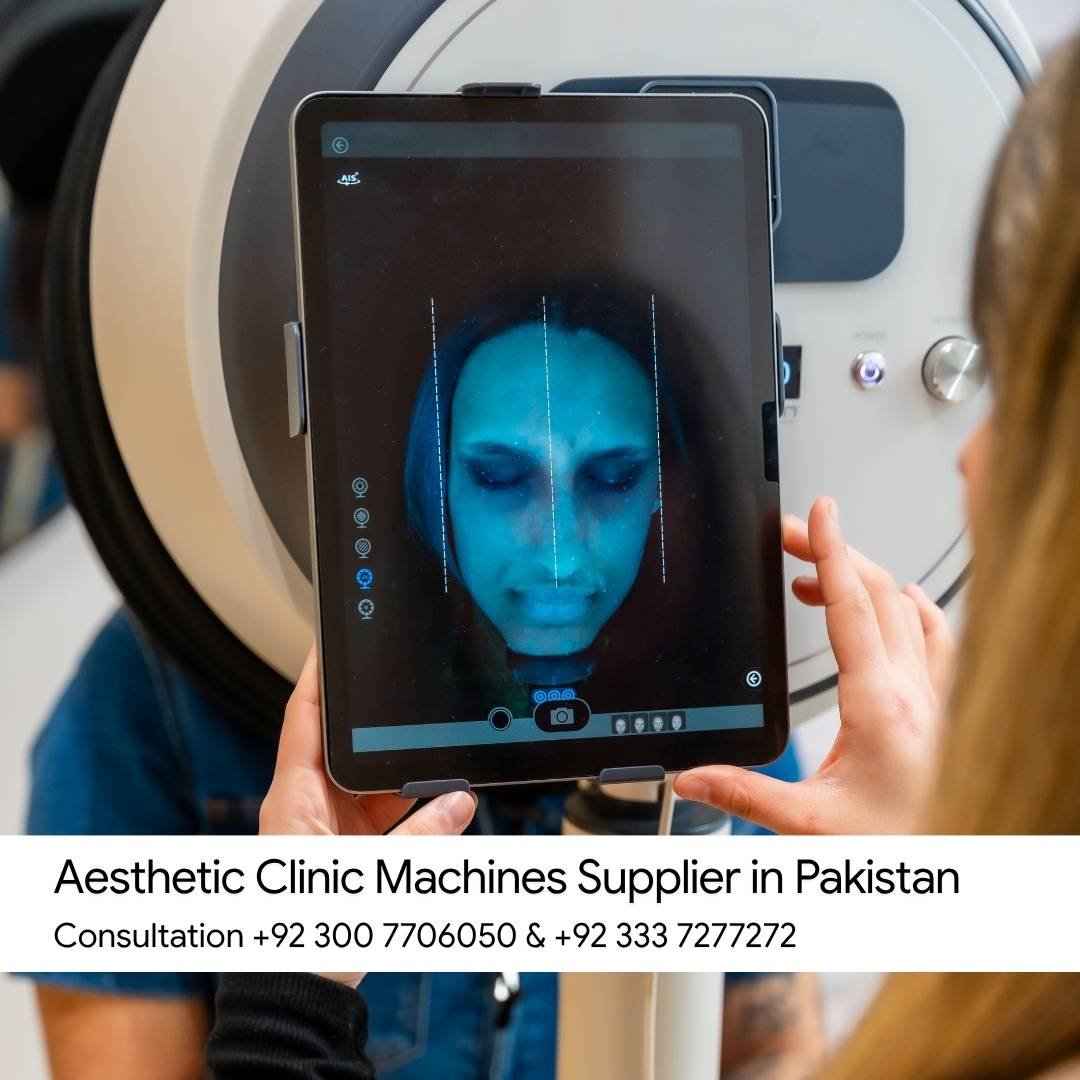
- Skin analysis machines
- Oxygen facial equipment
- LED therapy devices
- Aesthetic consumables and accessories
A professional supplier can help a clinic identify the appropriate technology according to its treatment menu, budget, patient demand, available space, technical requirements, and business objectives.
Why Choosing the Right Aesthetic Machine Supplier Matters
The machine itself is only one part of the investment.
Two machines may look similar in photographs but can differ considerably in their specifications, components, cooling systems, handpieces, energy delivery, software, durability, accessories, and service requirements.
For this reason, clinics should evaluate the supplier as carefully as they evaluate the machine.
A reliable supplier should ideally provide clear information about:
- Machine specifications
- Technology used
- Treatment applications
- Accessories and handpieces
- Warranty terms
- Installation
- Training
- Maintenance
- Spare parts
- Technical support
- Consumables
- Expected operating requirements
- Electrical requirements
- Service procedures
This becomes particularly important for clinics that depend on their machines every day.
If a machine stops working and technical support is unavailable, the clinic may have to postpone appointments, refund patients, or temporarily stop offering a particular treatment.
Aesthetic Clinic Machines Available in Pakistan
The Pakistani aesthetic industry uses a wide variety of technologies. The correct machine depends on the treatment being offered and the clinical requirements of the facility.
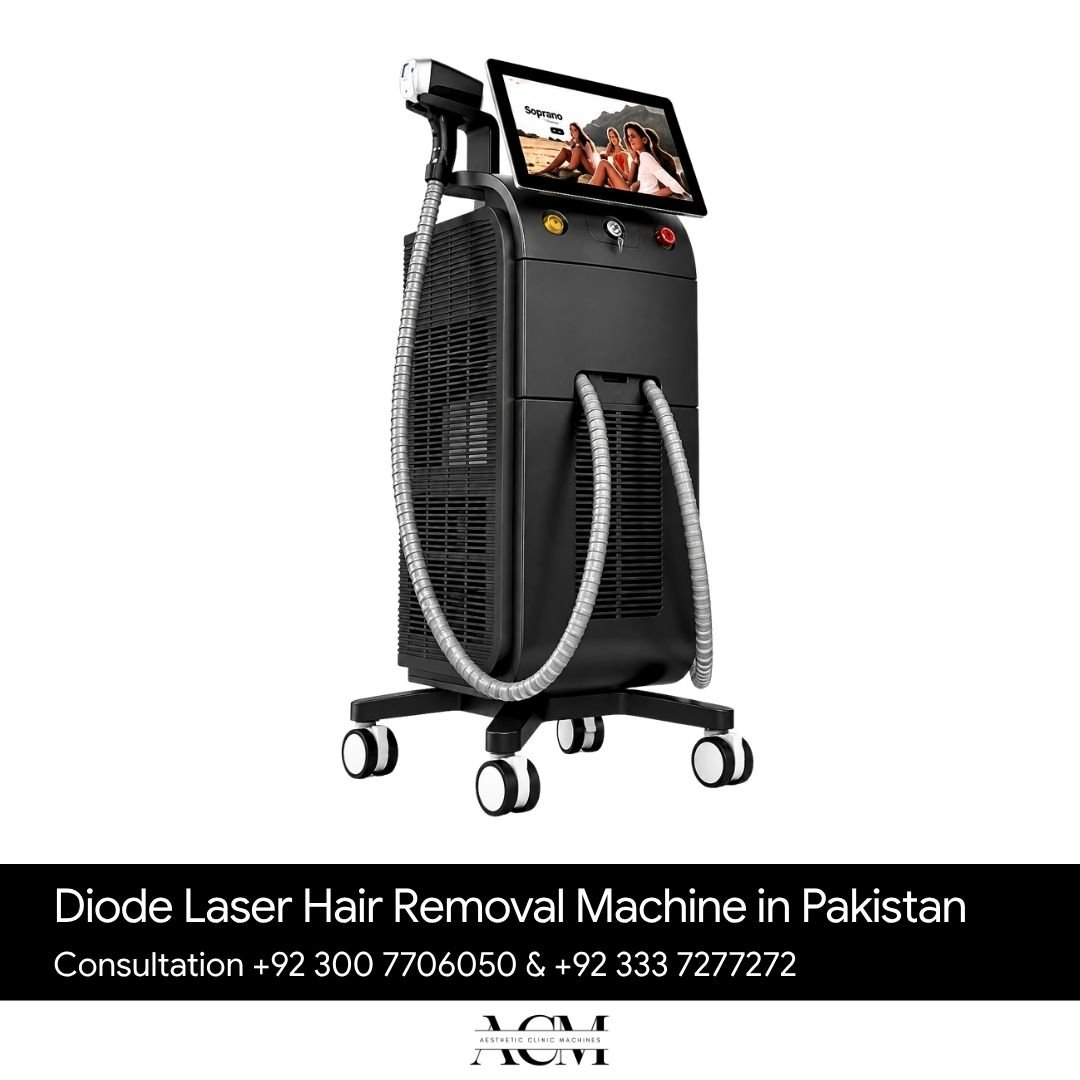
Laser Hair Removal Machines
Laser hair removal is one of the most commonly offered aesthetic treatments.
Professional laser systems may use technologies such as diode, Alexandrite, Nd:YAG, or combination platforms. Different wavelengths and configurations are designed for different skin and hair characteristics.
Modern systems may also include advanced cooling technologies to improve patient comfort during treatment.
When purchasing a laser hair removal machine, clinics should consider:
- Laser wavelength
- Energy range
- Spot size
- Repetition rate
- Cooling technology
- Handpiece design
- Treatment speed
- Software interface
- Service availability
- Replacement parts
- Operator training
A supplier should also explain the machine’s appropriate applications and limitations rather than simply focusing on marketing claims.
HydraFacial and Hydrodermabrasion Machines
HydraFacial-style and hydrodermabrasion systems are popular in aesthetic clinics because they can combine cleansing, exfoliation, extraction, hydration, and infusion-oriented procedures.
Different machines are available with varying numbers of functions and accessories, including basic systems and multifunction platforms.
When selecting a HydraFacial machine, clinics should examine:
- Vacuum performance
- Handpiece quality
- Tip availability
- Solution compatibility
- Number of treatment functions
- Pump quality
- Build quality
- Replacement accessories
- Ease of cleaning
- Local technical support
A supplier should also explain how to operate and maintain the equipment correctly.
HIFU Machines
High-Intensity Focused Ultrasound, commonly known as HIFU, is used in aesthetic settings for applications such as skin tightening and lifting.
Different HIFU platforms may offer different cartridge depths and treatment configurations.
Before purchasing a HIFU machine, clinics should understand:
- Available cartridge depths
- Cartridge lifespan
- Treatment applications
- Energy settings
- Handpiece design
- Replacement cartridge availability
- Training requirements
- Warranty and technical support
The supplier should provide accurate technical information and appropriate operator guidance.
Fractional CO2 Laser Machines
Fractional CO2 laser technology is used in professional aesthetic and dermatology environments for various skin-resurfacing applications.
Because CO2 laser equipment involves higher energy levels and requires appropriate operator knowledge, purchasing from a supplier that can provide proper technical training and support is particularly important.
Clinics should investigate:
- Laser source
- Scanner technology
- Energy range
- Spot and scanning modes
- Handpiece configuration
- Cooling system
- Replacement components
- Service support
- Operator training
Pico Laser and Pigmentation Treatment Devices
Pico laser technology has become increasingly popular in aesthetic medicine because of its short pulse duration and applications in various pigmentation and skin-treatment procedures.
Clinics considering a Pico laser should verify the actual technology and specifications rather than relying only on the word “Pico” in a product advertisement.
Important factors include:
- Wavelengths
- Pulse duration
- Energy range
- Frequency
- Handpiece configuration
- Manufacturer information
- Cooling
- Warranty
- Technical support
Body Contouring Machines
Body contouring has also become an important category within the aesthetic industry.
Depending on the technology, body contouring equipment may include:
- RF body contouring
- Cavitation
- Cryolipolysis
- EMS muscle stimulation
- Vacuum-based systems
- Multipolar RF
- Combination body sculpting platforms
Clinics should select technology based on the actual treatment services they intend to provide rather than purchasing a machine simply because it has many functions.
What Makes a Reliable Aesthetic Equipment Supplier?
Finding an aesthetic machine supplier in Pakistan is relatively easy. Finding a supplier that provides the right combination of product quality, technical support, maintenance, and after-sales service requires more research.
1. Quality Equipment
Machine quality should be one of the first considerations.
Clinics should ask for detailed specifications and understand what technology is being used inside the system.
Avoid choosing equipment purely because it has the lowest price.
A machine with a lower initial price can become expensive if it requires frequent repairs, has limited spare parts, produces inconsistent performance, or becomes difficult to maintain.
2. Technical Knowledge
A professional supplier should understand the equipment they sell.
The sales team should be able to explain:
- How the machine works
- What treatments it is designed for
- What accessories are included
- What maintenance is required
- What electrical requirements exist
- What consumables are required
- How frequently servicing may be needed
Technical knowledge is particularly important when purchasing advanced laser and energy-based aesthetic equipment.
3. Installation and Training
Buying a machine and leaving the customer to figure everything out is not ideal for professional clinics.
Installation and operator training can help clinic staff understand the equipment, controls, maintenance procedures, and appropriate operating practices.
Training should be appropriate to the machine and the intended professional users.
4. After-Sales Support
After-sales service is one of the most important factors when selecting an aesthetic equipment supplier.
A supplier should remain available after the sale for questions related to operation, maintenance, troubleshooting, and service.
This is especially important for clinics operating machines every day.
5. Maintenance and Repairs
Every machine requires maintenance.
Depending on the technology, maintenance may involve cleaning, inspection, calibration-related checks, replacement of consumable components, cooling-system checks, handpiece maintenance, or other technical procedures.
Before buying, ask the supplier:
Who will maintain the machine if something goes wrong?
A clear answer to this question can save a clinic significant time and money later.
6. Availability of Spare Parts
Aesthetic machines contain components that may eventually need replacement.
Examples can include:
- Handpieces
- Filters
- Pumps
- Tubing
- Tips
- Cartridges
- Cooling components
- Electrical components
- Optical components
- Consumable accessories
A supplier with access to appropriate replacement parts can help reduce downtime.
How to Choose an Aesthetic Machine for Your Clinic
Before purchasing any aesthetic machine, define the purpose of the investment.
Ask yourself:
What treatments do I want to offer?
Who are my target patients?
How frequently will the machine be used?
What is my available budget?
How much space is available?
Can my clinic meet the machine’s electrical requirements?
Who will operate the equipment?
What training is required?
What will maintenance cost?
Are spare parts available locally?
What happens if the machine develops a technical problem?
These questions can help prevent an expensive purchasing mistake.
Price vs. Total Cost of Ownership
The purchase price is only one part of the total cost of an aesthetic machine.
A clinic should also consider:
- Installation cost
- Training
- Maintenance
- Replacement parts
- Consumables
- Cartridges
- Handpieces
- Electricity consumption
- Technical service
- Downtime
- Accessories
For example, a machine that is slightly more expensive initially may have lower maintenance requirements and better support, while a cheaper machine may create additional expenses later.
Therefore, clinics should evaluate the total cost of ownership, not only the initial purchase price.
Aesthetic Clinic Machines Supplier for Pakistan
The Pakistani market includes clinics and aesthetic businesses in Islamabad, Rawalpindi, Lahore, Karachi, Multan, Faisalabad, Peshawar, Gujranwala, Sialkot, and other cities.
A supplier serving this market should understand the practical requirements of local clinics.
This includes providing equipment suitable for professional aesthetic environments, helping customers understand specifications, arranging installation and training where applicable, and supporting customers with maintenance and technical requirements.
For clinics outside major cities, after-sales support becomes even more important because technical assistance and spare parts may take longer to arrange.
Why Clinics Should Not Choose Machines Only From Photos
Online photographs can make different machines appear almost identical.
However, the external appearance does not necessarily tell you:
- Which components are inside
- What laser source is being used
- How effective the cooling system is
- What the actual energy output is
- How durable the handpiece is
- How the software operates
- Whether spare parts are available
- What technical support is offered
Before placing an order, request complete product information and discuss the machine with the supplier.
A professional supplier should be able to explain the product instead of relying exclusively on attractive photographs and promotional claims.
Importance of Warranty and Documentation
Before purchasing aesthetic equipment, ask for clear warranty information.
The supplier should explain what the warranty covers and what may be excluded.
You should also ask about:
- Warranty duration
- Parts coverage
- Service coverage
- Technical support
- Installation
- Replacement procedures
- Maintenance requirements
- Operator responsibilities
Keep invoices, warranty documentation, product information, and service records in a safe place.
These records can become valuable if the equipment requires future maintenance or technical support.
Aesthetic Equipment for New Clinics
New aesthetic clinics often face the challenge of deciding which machines to purchase first.
Instead of purchasing every available technology, a clinic can start with equipment that matches its planned treatment menu and patient demand.
For example, a clinic may consider a combination of:
- Laser hair removal
- HydraFacial
- Skin rejuvenation equipment
- HIFU
- RF technology
- Body contouring equipment
The exact combination depends on the clinic’s medical services, professional expertise, market demand, investment capacity, and treatment strategy.
A good supplier can help explain the differences between available systems so that the clinic can make an informed purchasing decision.
Aesthetic Machines for Established Clinics
Established clinics may have different requirements.
They may need:
- Additional treatment machines
- Newer technology
- Replacement equipment
- Higher-capacity systems
- Additional handpieces
- Spare parts
- Maintenance
- Upgrades
- New treatment categories
In these situations, supplier support becomes particularly important because existing clinics often depend on their equipment for daily appointments.
Maintenance of Aesthetic Clinic Machines
Regular maintenance can help extend equipment life and reduce unexpected downtime.
The maintenance requirements vary according to the machine.
General practices may include:
- Cleaning equipment according to manufacturer instructions
- Keeping machines in a suitable environment
- Checking cables and connectors
- Maintaining cooling systems
- Cleaning appropriate filters
- Inspecting handpieces
- Replacing consumable components when required
- Following recommended service schedules
- Keeping service records
Operators should follow the manufacturer’s instructions and appropriate professional protocols.
Why After-Sales Follow-Up Matters
A machine purchase should not be considered the end of the relationship between a supplier and clinic.
The supplier should remain available when the clinic needs assistance.
After-sales follow-up can include:
- Technical questions
- Operating guidance
- Troubleshooting
- Maintenance reminders
- Spare parts
- Service appointments
- Equipment inspections
- Training support
This level of support can make the ownership experience much easier for a growing aesthetic business.
Aesthetic Clinic Machines Supplier in Pakistan – Make an Informed Purchase
Choosing an Aesthetic Clinic Machines Supplier in Pakistan should involve more than comparing prices.
Clinics should evaluate machine specifications, technology, quality, warranty, installation, training, technical support, spare parts, maintenance, and after-sales service.
Whether you are establishing a new aesthetic clinic or upgrading an existing dermatology and aesthetic practice, the right equipment should match your treatment requirements and professional environment.
A reliable supplier can help you understand the available options and select equipment according to your clinic’s actual requirements instead of simply selling the most expensive machine.
From laser hair removal machines and HydraFacial systems to HIFU, Pico laser, fractional CO2 laser, RF, body contouring and other aesthetic devices, choosing the appropriate technology is an important part of building a professional aesthetic practice.
Buy Aesthetic Clinic Machines in Pakistan
If you are looking for aesthetic equipment for your clinic, medical spa, dermatology practice, beauty center, or aesthetic business, Aesthetic Clinic Machines provides a range of aesthetic devices and equipment for professional applications.
For machine specifications, product information, purchase orders, availability, technical assistance, and supplier support, contact Aesthetic Clinic Machines directly.
Contact for Purchase Orders and Aesthetic Machine Requirements:
03005673567
03008558558
Whether you need a laser hair removal machine, HydraFacial machine, HIFU system, Pico laser, Fractional CO2 laser, RF equipment, body contouring machine, or another aesthetic device, discuss your requirements with the supplier before making your purchase.
Aesthetic Clinic Machines – Your source for aesthetic equipment and clinic machinery in Pakistan.
About Aesthetic Clinic Machines

Related Posts